Gladiolus: The Garden Flowers That Refuse to Be Ignored
There are some flowers in my garden that quietly bloom in the background, looking pretty and behaving themselves.
Gladiolus are not those flowers.
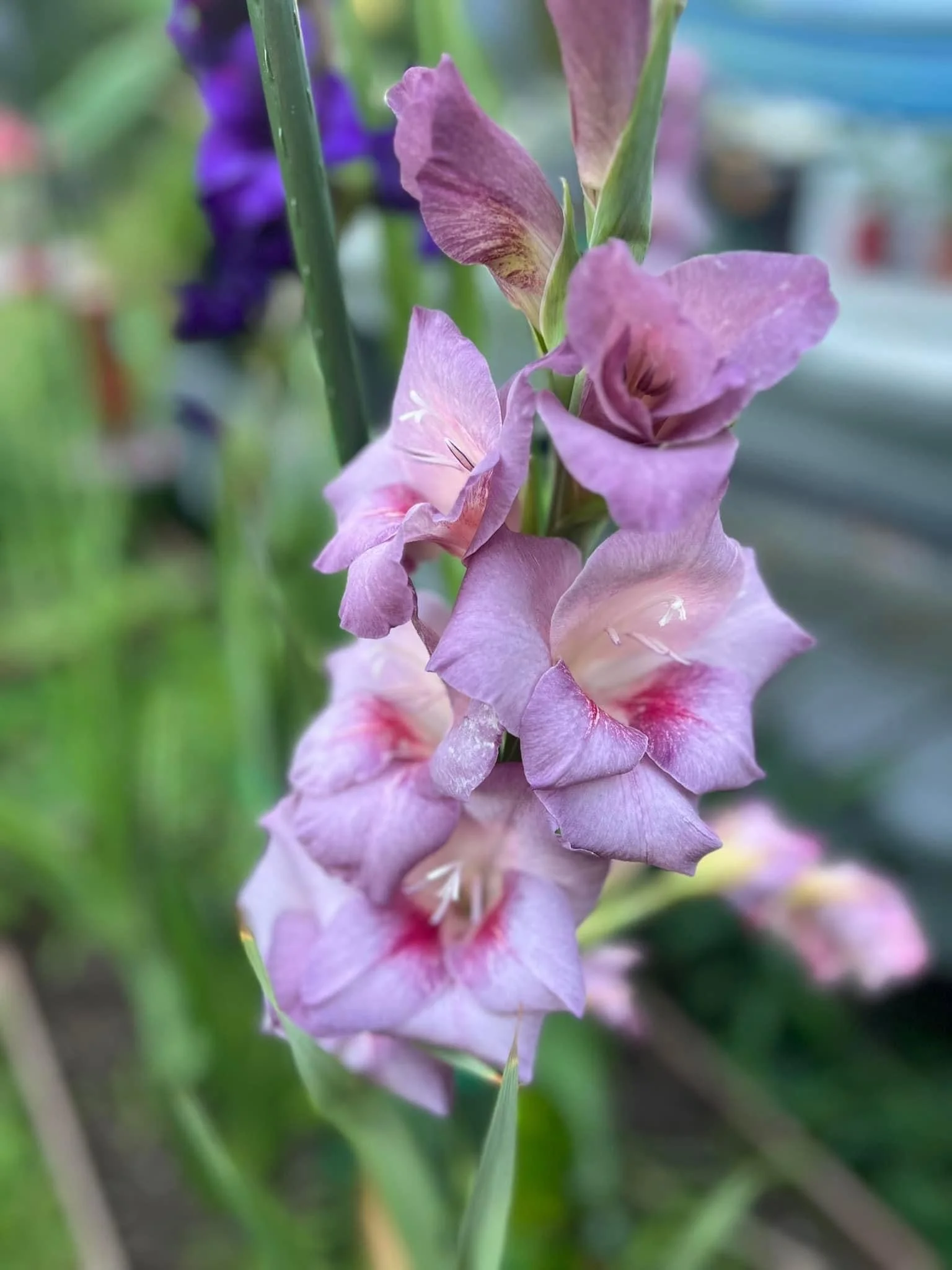
They shoot straight up from the garden like they have something important to announce, and then one by one those flowers begin opening along the stalk. Pink, cream, red, coral—each one somehow more dramatic than the last.
And I love them for it.
This year I had several different gladiolus bloom, and every time another one opened I found myself stopping to look at it. The soft lavender-pink one was almost delicate, while the creamy white flowers with their bright red centers looked like someone had taken a tiny paintbrush to them. Then there were the coral-pink blooms that were just begging to be cut and brought inside.
Of course, I did.
There is something wonderful about growing a flower outside and then cutting a stalk to enjoy inside the house. It feels different from buying a bouquet. I remember planting it. I watched the leaves come up. I waited for that first hint of color.
Then suddenly there it is sitting in a bottle on my kitchen counter.
Gladiolus are surprisingly easy to grow
For all their fancy appearance, gladiolus really aren't terribly complicated. They grow from corms that are planted in the spring after the danger of frost has passed. Give them sunshine, decent soil, water them when they need it, and then wait.
That waiting is probably the hardest part.
The long sword-shaped leaves show up first, and eventually a flower stalk emerges from the center. The blossoms begin opening from the bottom and slowly work their way upward.
That also makes gladiolus wonderful cut flowers because the entire stalk doesn't bloom at once. You can bring one inside and continue watching new flowers open for days.
And yes, I am already thinking about next year
This is the dangerous part of gardening.
You grow three colors.
Then you start wondering what other colors exist.
Then suddenly you're looking at packages of gladiolus corms thinking, Well, clearly I need orange ones. And deep purple. And maybe green. Do gladiolus come in green?
This is how gardens happen.
One flower at a time.
But maybe that is part of what I love about gardening. A garden is never really finished. Every season teaches me something, surprises me with something, or gives me another idea for next year.
Some things thrive. Some things completely flop. Some flowers appear in colors I forgot I planted.
And occasionally something grows so beautifully that I simply stand there staring at it.
These gladiolus were one of those things.
They reminded me again that part of gardening is simply paying attention—stopping long enough to notice what is blooming right in front of us.
Because sometimes beauty doesn't whisper.
Sometimes it grows four feet tall in the middle of the garden and basically yells,
“HEY. LOOK AT ME.”
And honestly?
I think we all need a few flowers like that.
Wild Grace, Faith & Gardens
How to Dry Lavender and Save a Little Bit of Summer
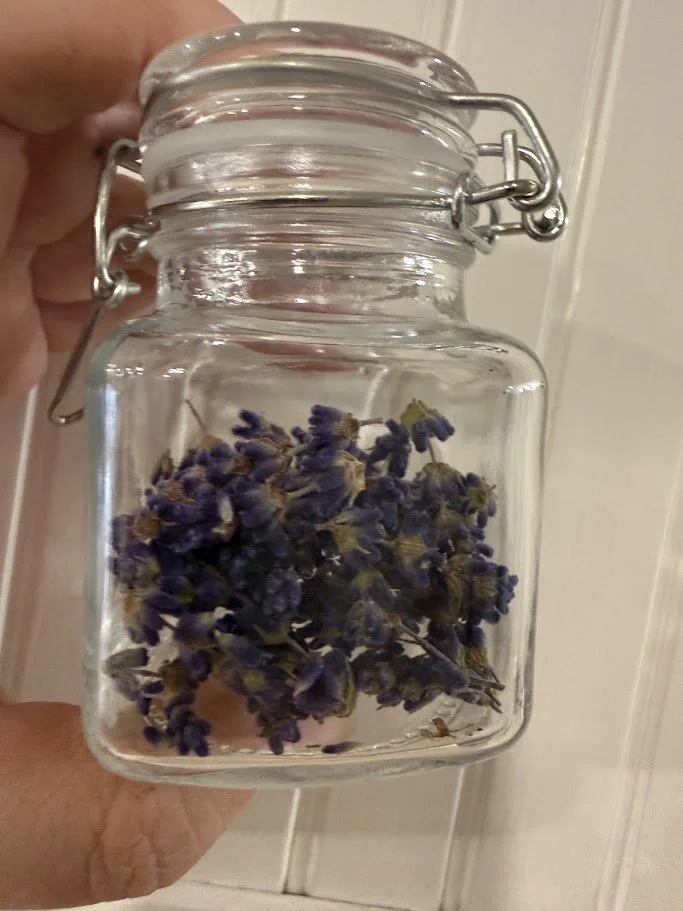
There is something lovely about bringing lavender in from the garden and saving it for later. The color, the scent, even the simple act of tying the stems together feels like holding onto a little piece of summer.
To dry lavender, cut the stems after the morning dew has dried, ideally when the buds are formed but not completely open. Gather them into small bundles, tie them together, and hang them upside down somewhere dry, dark, and well ventilated.
In about one to three weeks, the stems should feel crisp and the flowers will easily rub free. Once dry, store your lavender in an airtight container away from heat and sunlight.
Use it in sachets, potpourri, wreaths, crafts, or simply keep a bundle nearby and enjoy the fragrance. Sometimes the simplest things from the garden end up being the ones we treasure most.